

Meet Miss Cammie: A Conversation with a Long-Time Heart of IPF
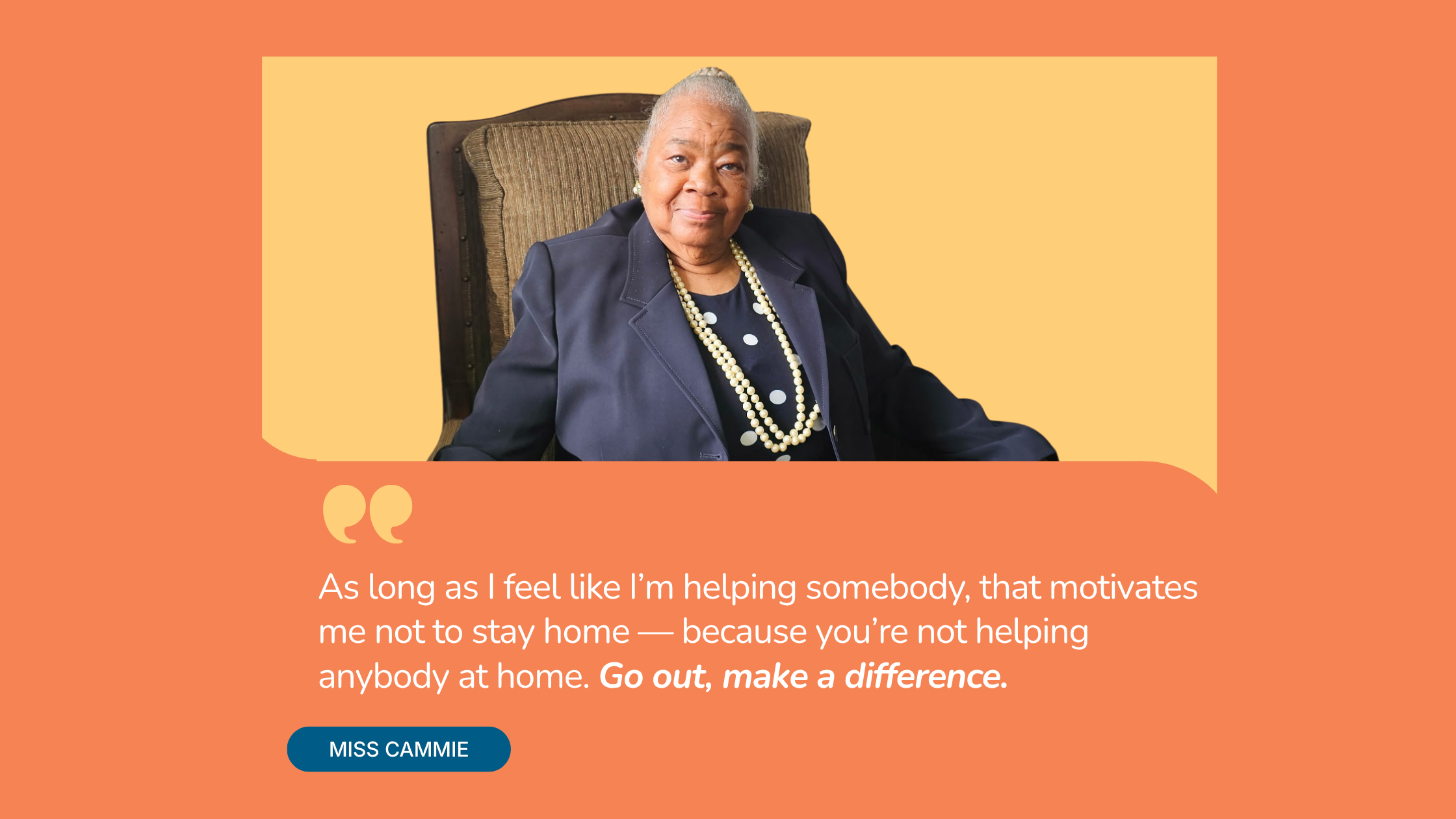
If you stop by Caring For Others on a weekday, there is a good chance Miss Cammie will be there. She will have been there yesterday, too. And the day before. Since 2011, she has shown up — full-time, as a volunteer — for what she calls her God-given gift.
“My gift to me is service,” she says. “So when I come to Caring For Others, I feel like I’m giving a service to the people.”
That sentence is the most efficient introduction to the International Poverty Forum we know how to give. IPF is many things at once — a global convening, a thought platform, a coalition of leaders working to eradicate poverty rather than manage it. But the heart of the work, the part that lasts long after the keynote ends and the lights come down, is the daily, granular act of treating people as neighbors. That is the part Miss Cammie has been doing for fifteen years.
She came to it the long way. By trade, she is a professional seamstress, with a career spent fitting fabric for interior decorators across metropolitan Atlanta. When she retired, she sat at home for exactly one week. Then Mrs. Shockley’s name came to her, and she picked up the phone. “Do you have room in your organization for a full-time volunteer?” The answer came back: “Miss Cammie, come on down.” She was there the next day. She has not missed many since.
Ask her what has stayed with her after fifteen years, and she does not pause. She talks about First Impressions — the day she helped fit a class of college students with brand new wardrobes. Young men in their first suits. Young women in dresses, head to toe. “That sticks with me,” she says, “because that resonates back to serving the people with dignity. Your first impression sometimes may be your last.”
That sentence is IPF’s philosophy in a single line. The brand-new suit. The wardrobe that fits. The care that does not show up secondhand. IPF treats poverty as an enemy to be eradicated, not a condition to be managed — and the way you fight that enemy, every day, is by refusing to design programs that quietly tell people they are less than. Dignity at IPF is not an outcome of the work. It is the design of the work. Miss Cammie’s hands, trained over a lifetime to fit and finish, have helped shape what that looks like.
It also explains something about how IPF actually runs that partners and donors should understand. The Forum draws heads of state, executives, humanitarians, and faith leaders from around the world. The convening matters. But IPF was never built to be only a convening. The model — the marriage of dialogue and tangible delivery — rests on the conviction that a conversation about poverty is unfinished until something brand new is in someone’s hands. That requires a different kind of staffing. It requires people who do not come and go with the calendar. It requires a Miss Cammie.
She is clear about what keeps her coming back. “As long as I feel like I’m helping somebody, that motivates me not to stay home — because you’re not helping anybody at home. Go out, make a difference.” If it isn’t a big difference, she says, then a little one. Either way, she returns. Fifteen years of unbroken showing up is, in its own way, a strategic asset — the kind of institutional muscle memory most organizations would pay a consultant to build. IPF has it built in.
For donors and partners trying to understand what their generosity actually buys, Miss Cammie’s answer is the simplest, truest one we have heard: “Whatever the donors see is brand new. Just keep donating. We’ll keep doing what we do.”
That is the contract IPF asks our community to keep. Donors fund the dignity. Partners help scale it. And people like Miss Cammie make sure the box is full, the suit fits, and the next person who walks through the door is welcomed like a neighbor.
IPF means, eventually, to put itself out of business — that is what it means to treat poverty as an enemy to be eradicated. Until the day that happens, the work continues. Not only on the main stage, but on a Tuesday morning, at a workbench, in a wardrobe room, in the quiet repetition of a woman who calls service her gift. Fifteen years in, Miss Cammie is one of the quiet, daily reasons the International Poverty Forum means what it says.
