

Meet Wesley Myrick: A Conversation with Our Senior Advisor
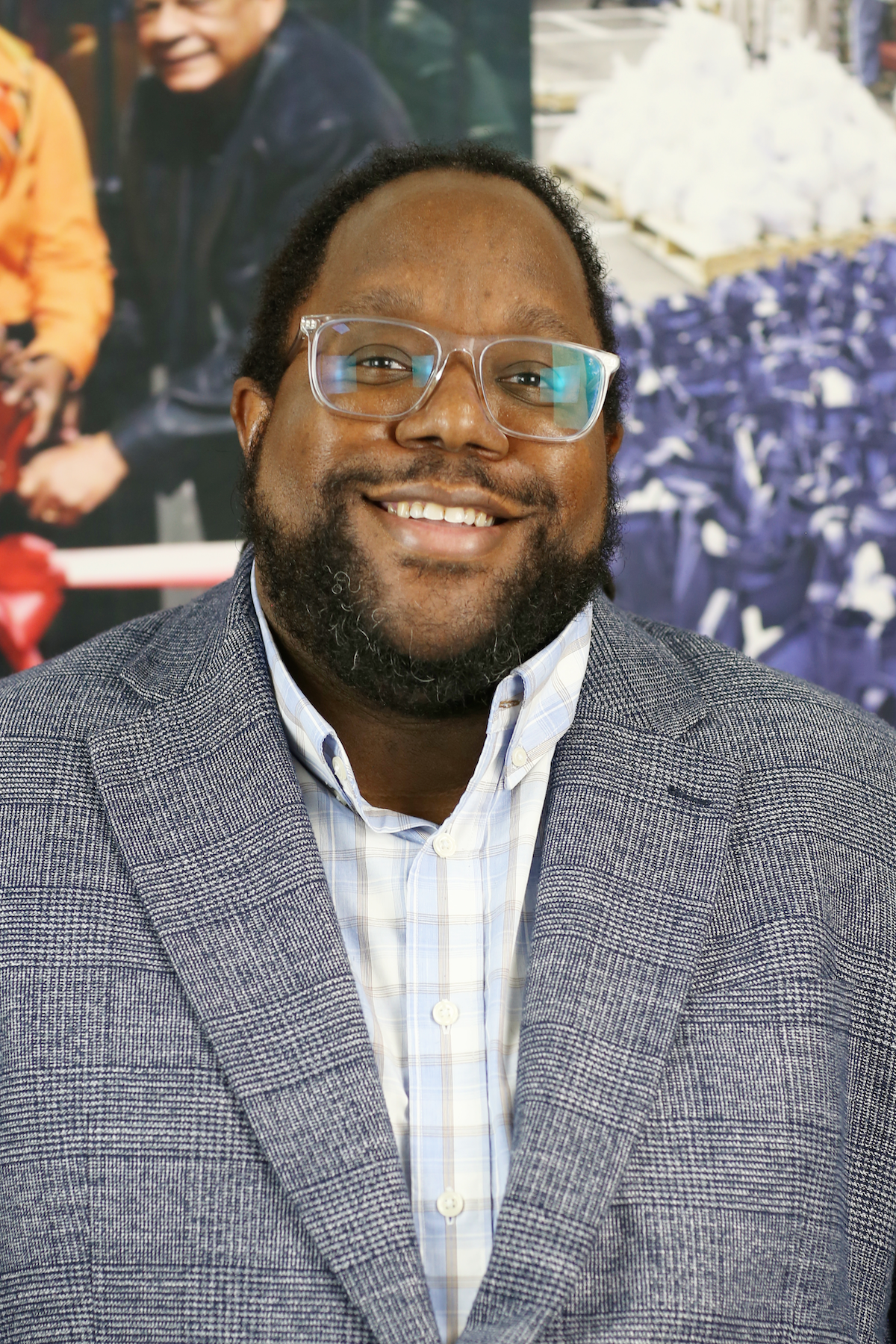
“Dignity is the only thing that matters about surviving poverty.”
Wesley Myrick
Senior Advisor
International Poverty Forum, a program of Caring For Others Inc.
It started in a warehouse. Wesley Myrick was volunteering with Caring For Others, sorting items for a disaster distribution, when something clicked. “It was through this experience of taking something procured with love and preparing it for distribution to restore dignity that I first came to love the work of the IPF,” he says.
That sentence is the most honest description of his leadership we know how to give. Wesley leads IPF from the same posture that brought him in the door — the conviction that the small, careful, dignifying act is the unit of measure for everything else IPF does.
He came to the work by way of two worlds. His career began in the local church, at the intersection of for-profit enterprise and ministry, rooted in community. He also holds a master’s in international affairs. The combination gives him a particular vocabulary — grounded in the realities that global economic systems have inherent inequities, but hopeful that thoughtful leaders, in partnership with the people they serve, can shift those systems toward better outcomes. He calls it hopeful realism. It is also a fair description of IPF.
Day to day, leading IPF looks less like the convening and more like the quiet work that makes the convening matter. “Daily, we connect with partner organizations to determine possible intervention points to eradicate poverty in communities across the globe,” he says. The work is intelligence-gathering. It is coalition-building. It is refining the value proposition for donors so that conversations about poverty are not just earnest, but actionable. And it is, more than donors might guess, an exercise in patience. “Our assembly allows us to convene leaders, but we plan for an average of eighteen months for these major engagements.”
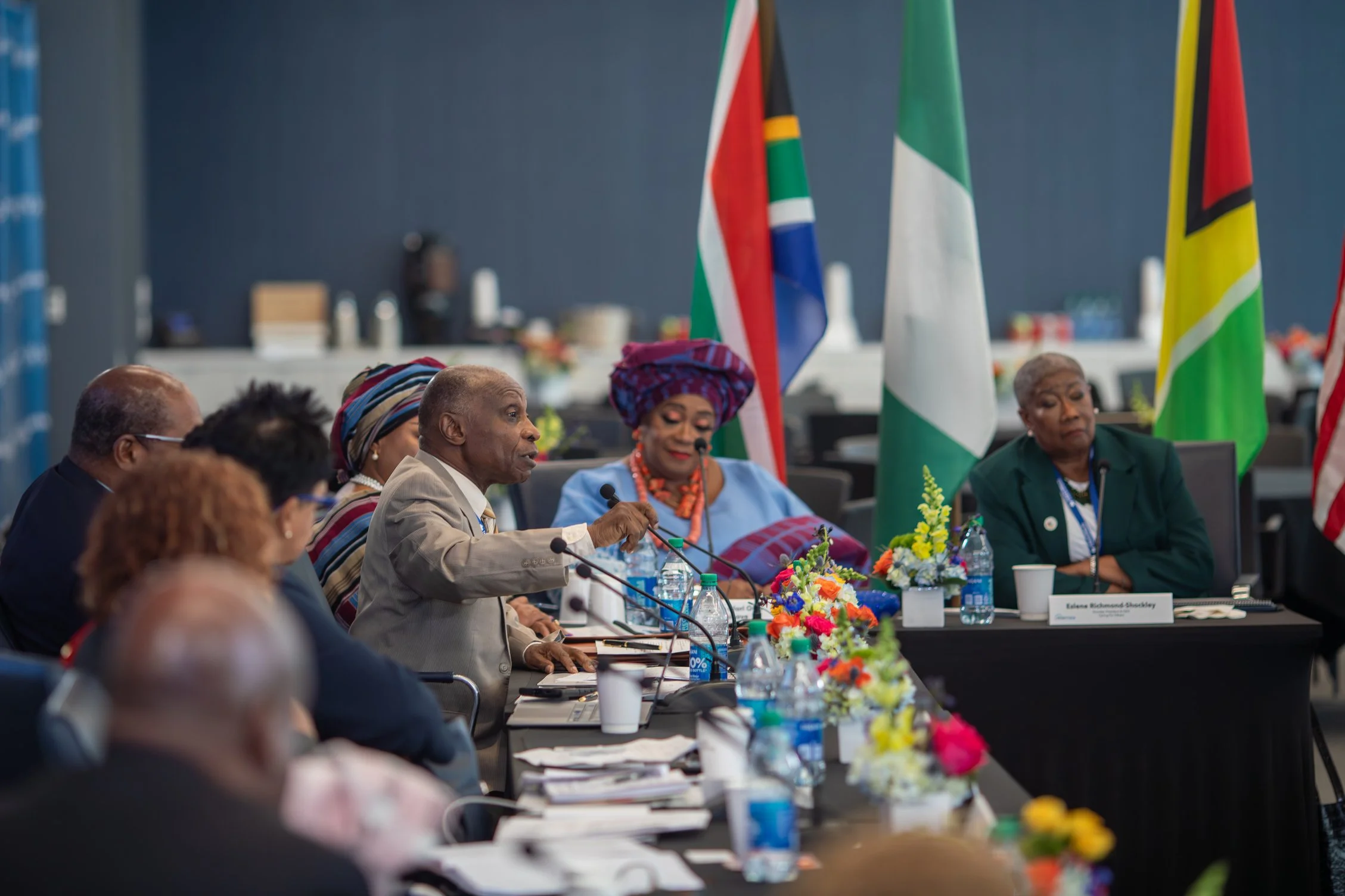
The International Poverty Forum
Think Tank
The Think Tank is where policy and practice come together in collaborative cross-country workgroups dedicated to specific initaitives.
That eighteen-month figure is one of the things he wants supporters to understand. The photographs and the distributions and the brand-new items in someone’s hands are the visible part. Behind each of them is a year and a half of unseen design. IPF was born from the international work of Caring For Others, and the patience that built CFO is the patience that builds IPF.
Ask Wesley on what distinguishes IPF from other organizations doing humanitarian work, and his answer is revealing. “Dignity is the only thing that matters about surviving poverty,” he says. “It is what separates us from other organizations that may make spectacles of the people they serve. We support our clients where they are, give them hope for where they can go, and with our government partners, create economic opportunities that attract new investment in communities that need it most.”
That is the IPF model stated in operational language. Meet people where they are. Help them build stability — something many have never had. Make the strategy practical enough to attract capital, and disciplined enough not to turn people into props. “We deploy a strategy that allows our clients to build something they have never had: stability,” he says. “And we help them build it alongside their government, which sets us apart.”
For Wesley, the work also turns on a particular conviction about belief — and it is the line he returns to most often. “The notion that one’s temporary state of poverty has to define one’s entire existence — our work is to demonstrate that contrary thinking is fallacious. Hope, study, and work can create a better life for generations.” That is the IPF mission stated in the form of a personal creed.
He has watched it pay out in measurable ways. He talks about the 2022 Annual Assembly, where international financial leaders mapped the African diaspora’s unique exclusion from global capital — and the small reframing that opened the door to billions of dollars in non-extractive investment. “What unlocked billions of dollars was not a new idea, but simply a new application in a market previously thought not viable,” he says. “That singular shift in thinking has given rise to billions in economic impact. We similarly try to offer small ideas that can have an outsized impact on the lives of people around the globe.”
That posture — small idea, outsized impact — is also how he thinks about donor generosity. “Your support helps us deliver economic development grants to entrepreneurs who cannot access traditional financial markets, and for that we are grateful,” he says. “But we are even more elated that our microgrants are creating returns on investment in just twelve months — returns that demonstrate the power of belief in a person’s dream, and not just their current circumstance.”
That last clause is worth reading twice. Wesley leads IPF as someone trained in both the global economy and the local church, and what both vocabularies share is a refusal to let anyone be reduced to the moment they are in. Under his guidance as a Senior Advisor, IPF funds dreams as a matter of strategy. The convenings will keep happening. The distributions will keep happening. But the through line — the conviction he carried in from a sorting line at a disaster distribution and he now carries into every corner of the organization — is that dignity is not a soft outcome. It is the entire point.
